DEPARTMENT OF CRIMINAL LAW OF THE INSTITUTE OF LAW

The Department of Criminal Law and Procedure

Academic and Research Institute of law

Sumy state university

Representative of the Department of Criminal Law and Procedure Participated in a Webinar on the Promotion of Educational Services and Career Guidance Activities

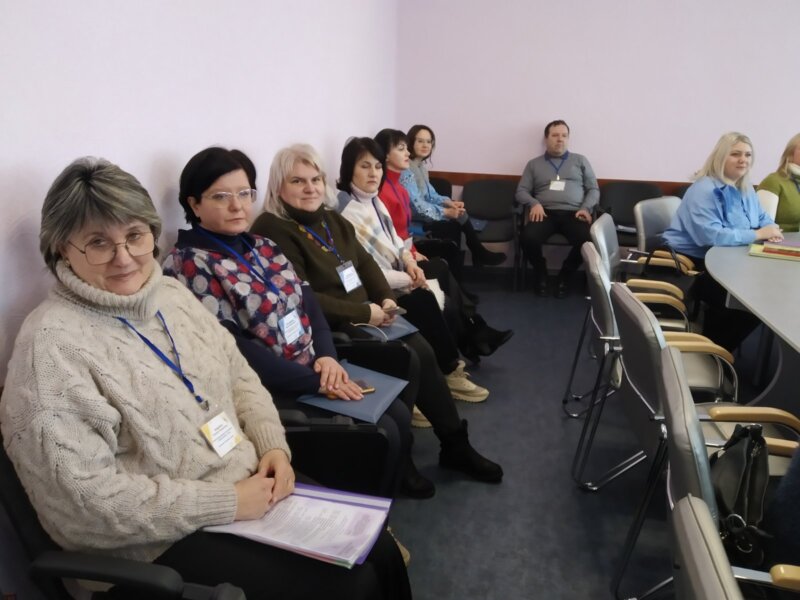
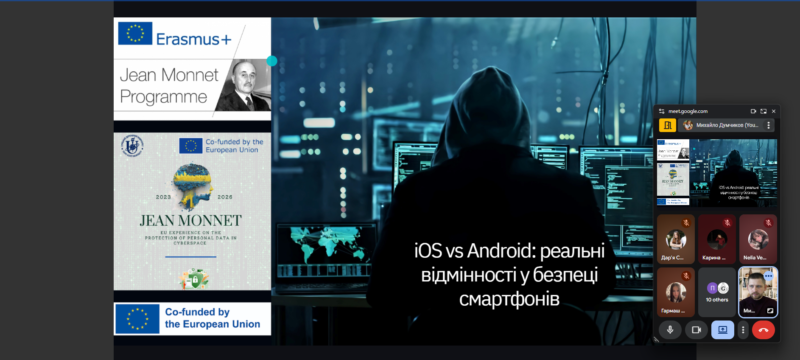
Associate Professor Mykhailo Dumchykov of the Department of Criminal Law and Procedure (KPDС) at the Academic and Research Institute of Law, Sumy State University, participated in a webinar entitled “Promotion of Educational Services within the University Career Guidance System.”

Read more

Loading

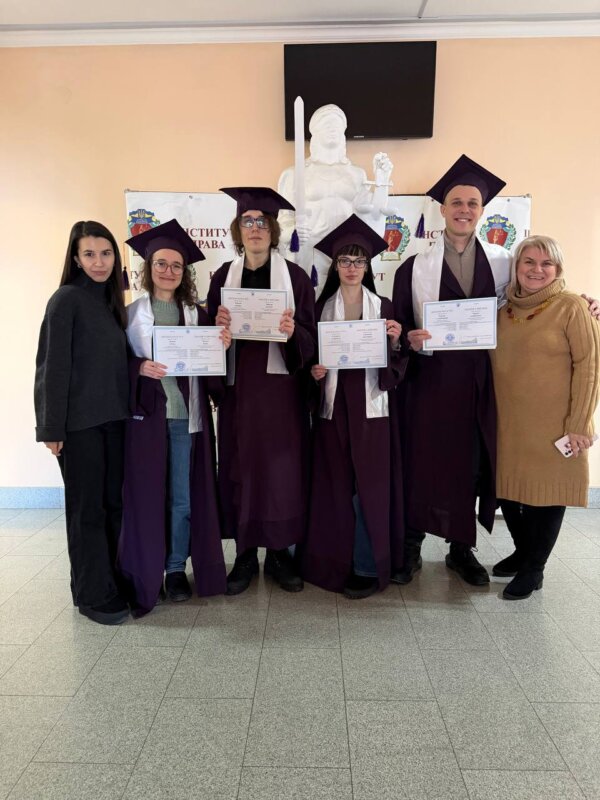
Diploma Award Ceremony Held at the Department of Criminal Law and Procedure for Graduates of the “Intellectual Property” Educational Programme

A formal diploma award ceremony was held at the Department of Criminal Law and Procedure for graduates of the “Intellectual Property” educational programme. The event marked an important final stage in the academic journey of higher education graduates who successfully completed the programme and acquired professional knowledge in the field of legal protection and enforcement of intellectual property rights.

Read more

Loading

The Department of Criminal Law and Procedure Initiates International COIL Cooperation with a U.S. University

Today, the first working online meeting took place as part of the preparation of an international educational COIL (Collaborative Online International Learning) project between the Department of Criminal Law and Procedure of the Academic and Research Institute of Law at Sumy State University and California State University, Chico (USA).

Read more

Loading

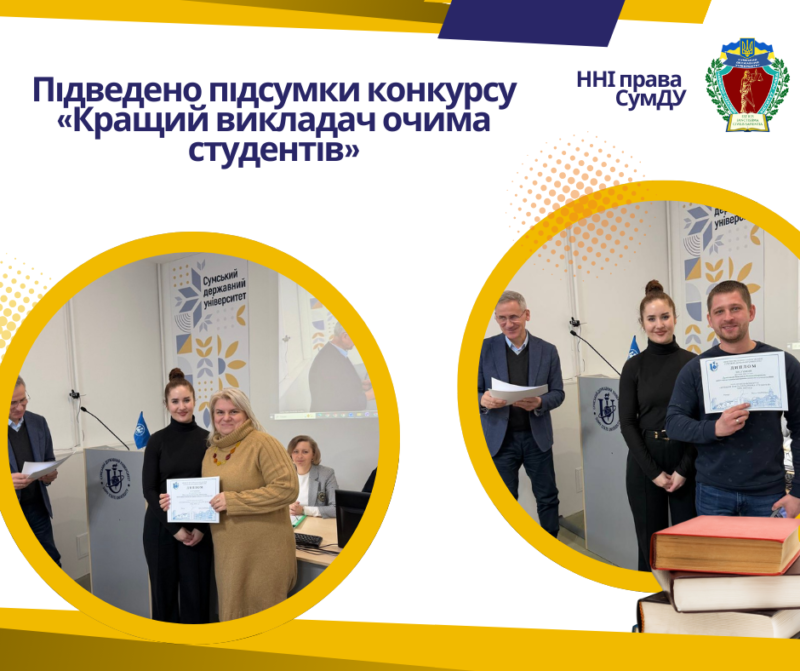
Representatives of the Department of Criminal Law and Procedure among the Best Academic Staff of SumDU

The Department of Criminal Law and Procedure of the Academic and Research Institute of Law at Sumy State University has once again confirmed its high academic and pedagogical standards and its active contribution to strengthening the University’s human capital.

According to the results of the “Best Academic Staff of SumDU” competition for the 2024–2025 academic year, representatives of the Department were recognised as laureates at both the University and Institute levels, demonstrating the effectiveness of their educational, research, and organisational activities.

Among the laureates of the competition are:
▪️ Maryna Utkina — Associate Professor of the Department of Criminal Law and Procedure;
▪️ Olha Maletova — Head of the Department of Criminal Law and Procedure.

The professional achievements of the lecturers received high recognition at the University level, once again confirming the role of the Department of Criminal Law and Procedure as one of the leading academic and educational units of the University in the field of criminal law and judicial proceedings.

👏 The Department warmly congratulates its colleagues on this well-deserved recognition and wishes them further academic achievements, professional growth, and new successes.

Read more

Loading

The Department of Criminal Law and Procedure Successfully Held the Scientific and Practical Workshop

On 23 December 2025, the Department of Criminal Law and Procedure of the academic and research institute of law organised and held the scientific and practical workshop “GDPR in Your Pocket: European Practices of Data Protection on Smartphones” within the framework of the ERASMUS-JMO-2023-MODULE – ERASMUS2027 – 101125350 – “EUEPPDC” project (Jean Monnet Module of the Erasmus+ Programme).

Read more

Loading

A Practical Forensic Lecture Held for Students of the “Law Enforcement Activity” Programme

On 16 December 2025, at the initiative of the Department of Criminal Law and Procedure of the Academic and Research Institute of Law of Sumy State University, a practice-oriented lecture entitled “Forensic Experts at a Crime Scene: How It Works in Reality” was held for students of the “Law Enforcement Activity” educational programme.

Read more

Loading

Balancing Cybersecurity and Privacy: A Lecture–Discussion within the Jean Monnet Project “EUEPPDC”

As part of the implementation of the Jean Monnet Module project ERASMUS-JMO-2023-MODULE – ERASMUS2027 – 101125350 “EUEPPDC: EU Experience in Personal Data Protection in Cyberspace”, a legal awareness and educational event was organized for students enrolled in the Law, International Law, and Law Enforcement degree programmes.

The event was held in the format of an interactive lecture and discussion entitled:

“Where Is the Boundary Between Ensuring Cybersecurity and Interfering with the Right to Privacy?”

During the event, participants examined contemporary challenges related to balancing the state’s legitimate public interests in ensuring cybersecurity with the protection of fundamental human rights, particularly the right to privacy and the right to personal data protection. Special attention was devoted to European standards of personal data protection, the practical implementation of the General Data Protection Regulation (GDPR), and the European Union’s approaches to assessing the legitimacy, proportionality, and necessity of state intervention in digital privacy under conditions of evolving cyber threats.

Through an open discussion format, students were encouraged to express their views on the acceptable limits of state oversight in cyberspace, explore challenges associated with large-scale data collection, digital surveillance, the use of artificial intelligence technologies and cyber intelligence tools, and critically assess the potential risks of misuse and excessive interference with individual rights.

The event contributed to enhancing students’ legal awareness, fostering critical thinking regarding the balance between security and human rights, and deepening their understanding of European approaches to cyberspace regulation. These issues are of particular relevance to future legal professionals, international law specialists, and law enforcement practitioners operating in an increasingly digitalized environment.

Disclaimer to use in all communication materials: Funded by the European Union. Views and opinions expressed are however those of the author(s) only and do not necessarily reflect those of the European Union or the European Education and Culture Executive Agency (EACEA). Neither the European Union nor EACEA can be held responsible for them.