

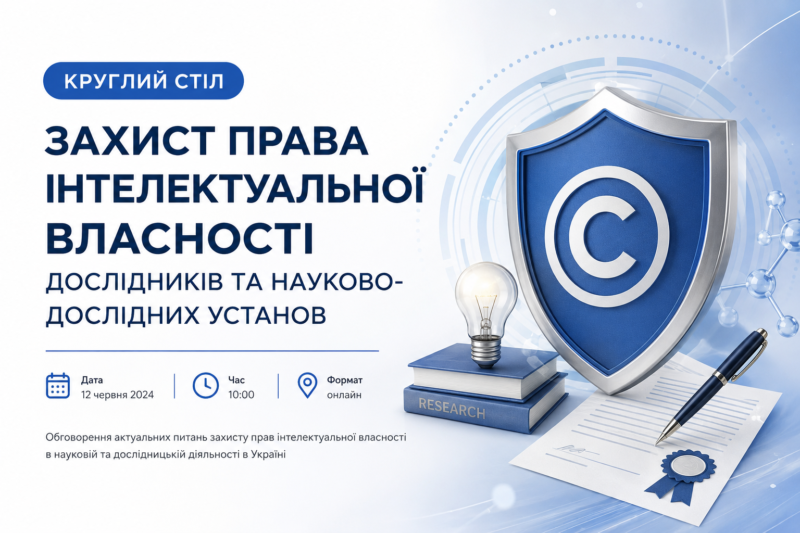
On June 12, 2026, the Department of Criminal Law Disciplines and Judiciary hosted a round table on the topic “Protection of Intellectual Property Rights of Researchers and Research Institutions.” The event brought together scientists, practicing lawyers, intellectual property experts, and representatives of higher education institutions and research establishments.
The event served as a crucial platform for the professional discussion of contemporary challenges in the field of protecting and defending intellectual property rights in research activities. Key topics included the nuances of commercializing research results, the impact of open science policies on the legal regime of intellectual property objects, and the latest trends associated with the use of artificial intelligence.
The organizers delivered a welcoming address to the participants, emphasizing the growing importance of effective legal protection for the results of intellectual activity amidst the digital transformation of science and Ukraine’s integration into the European research area.
-
Anna Shtefan (Doctor of Law, practicing lawyer, international projects expert, and Head of the Department of Copyright and Related Rights at the Scientific Research Institute of Intellectual Property)
-
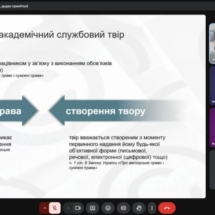
Topic: “Problems of Academic Works-for-Hire and Open Science”
-
Highlights: The speaker focused on the legal aspects of creating works-for-hire in the scientific sphere, the distribution of property rights between authors and institutions, and the challenges arising from the proliferation of open science principles and open access to research results.
-
-
Anton Polikarpov (Managing Partner of the Law Bureau “Polikarpov Law Firm” – https://polikarpov.legal/)
-
Topic: “Patent Novelty and Scientific Publication: How a Researcher Can Preserve the Possibility of Legal Protection for Research Results”
-
Highlights: This presentation generated significant interest. The speaker detailed the practical aspects of the relationship between patenting and publishing scientific research results. He highlighted the risks of losing the novelty criterion due to premature publication and outlined action algorithms for researchers aiming to ensure adequate legal protection for their developments.
-
-
Anastasiia Yarmoliuk (PhD, Assistant at the Department of Intellectual Property and Information Law of the Educational and Scientific Institute of Law at Taras Shevchenko National University of Kyiv, and Head of the Department for the Development of the Network of Technology and Innovation Support Centers at the “Ukrainian National Office for Intellectual Property and Innovations” [UANIPIO])
-
Topic: “Features of Legal Protection of Intellectual Property and Development of Innovation Infrastructure in Higher Education Institutions and Research Establishments: European Experience and Perspectives for Ukraine”
-
Highlights: The report covered modern technology transfer mechanisms, the activities of technology and innovation support centers, and promising directions for adapting European practices to Ukrainian realities.
-
-
Olha Martysh (CEO of IPSTYLE)
-
Topic: “Commercialization of Innovations in Research Institutions: How IP Approaches Change the Role of the University”
-
Highlights: Drawing special attention from the audience, the speaker emphasized that the modern university increasingly acts not just as an educational and scientific center, but as an active participant in the innovation ecosystem. The presentation explored tools for managing an intellectual property portfolio, the specifics of collaborating with businesses, and mechanisms for transforming scientific results into competitive, innovative products.
-
-
Yevheniia Lytvynenko (Head of the TISC at Sumy State University)
-
Topic: “Harmonization of Copyright Protection for AI Software in Scientific Research: Approaches of Ukraine and the European Union”
-
Highlights: Concluding the scientific discussion, this presentation analyzed current trends in the legal regulation of creative outputs generated using artificial intelligence technologies. It also covered the specifics of determining copyright subjects for AI software and the prospects for harmonizing Ukrainian legislation with EU law in this domain.
-
Following the round table, participants noted the high caliber of the scientific discussion, the relevance of the issues raised, and the necessity for continued interdisciplinary dialogue. This ongoing conversation is vital for improving the mechanisms of legal protection for the intellectual activity of researchers and institutions in the context of rapid technological advancement and Ukraine’s ongoing European integration.