

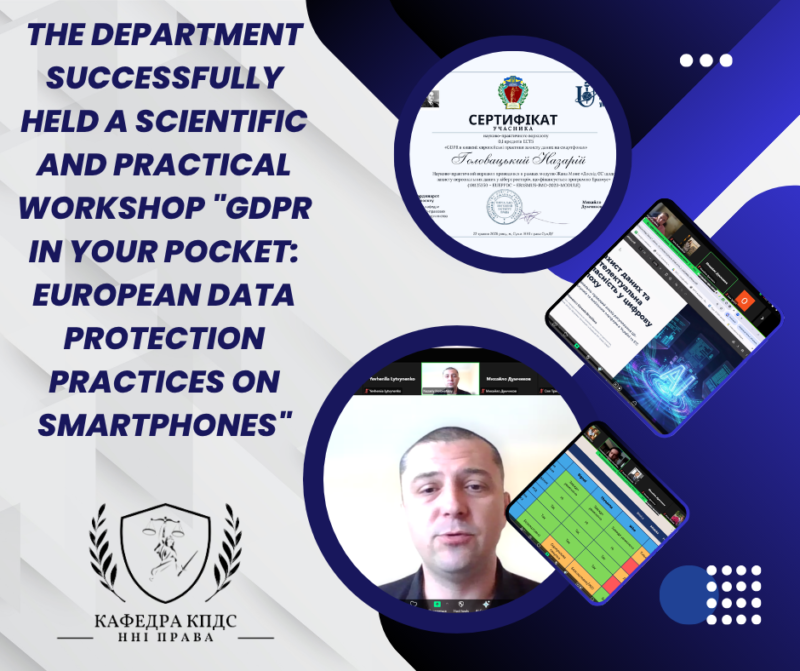
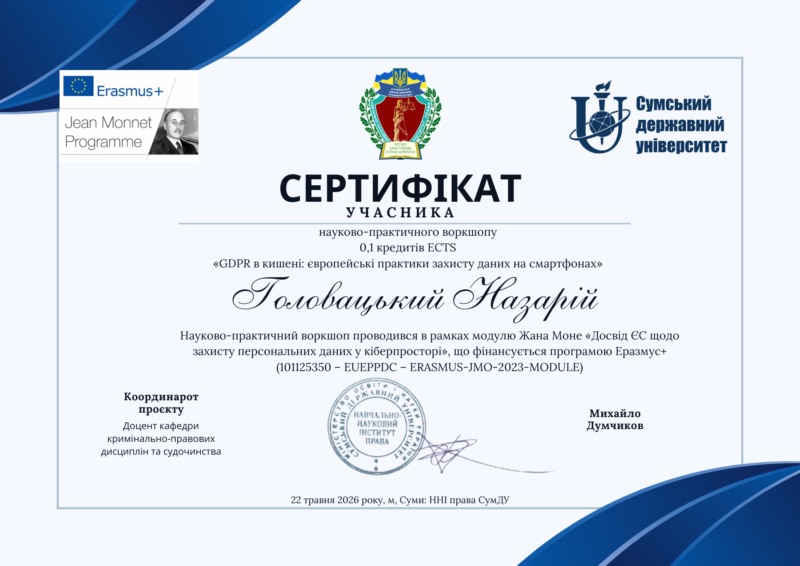
On May 22, 2026, a scientific and practical workshop dedicated to the pressing challenges of cybersecurity and personal data protection in the digital age was held online. The event convened leading experts, academic staff, students, and prospective university applicants interested in digital privacy and IT law. The workshop was conducted within the framework of the Jean Monnet Module educational project (ERASMUS-JMO-2023-MODULE EUEPPDC).
The session was moderated by Mykhailo Dumchikov, Associate Professor at the Department of Criminal Law Disciplines and Procedure. In his opening remarks, he outlined the primary focus of the event: the identification of digital risks, mechanisms for their mitigation, and the overarching security of smartphone users.
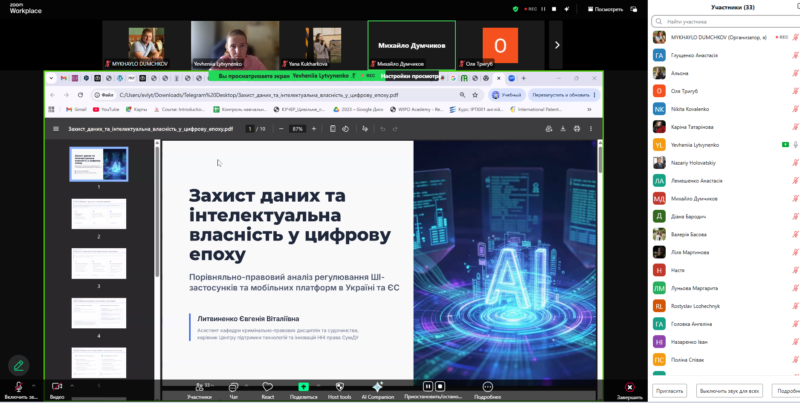
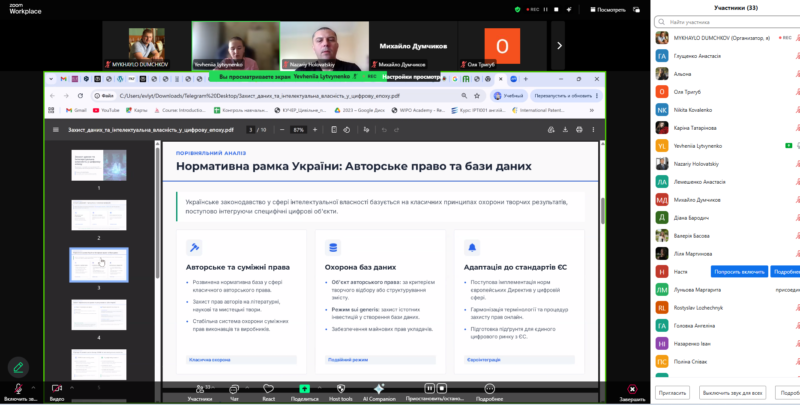
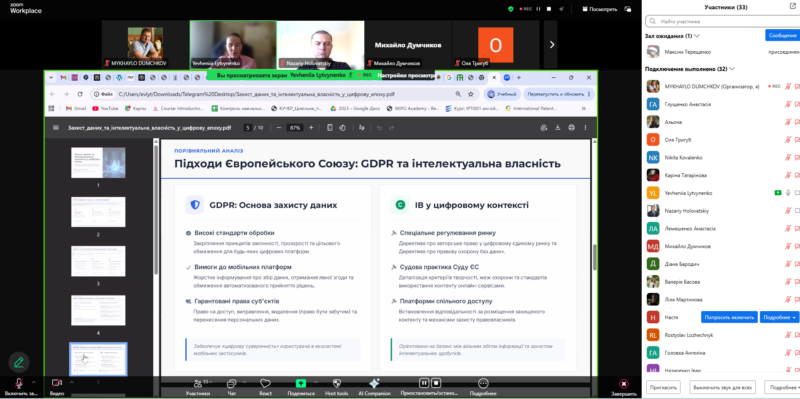
The presentation program commenced with Yevheniia Lytvynenko, Assistant at the Department of Criminal Law Disciplines and Procedure and Head of the Technology and Innovation Support Center at Sumy State University. She presented a comprehensive analysis of the regulatory challenges concerning the protection of personal data and intellectual property in mobile applications. The speaker compared Ukrainian legislation with European standards—most notably the General Data Protection Regulation (GDPR)—and emphasized the necessity for the targeted harmonization of legal norms, enhanced platform liability, and clearer regulation of AI-generated content.
The academic discourse was continued by Nazariy Holovatskyi, Senior Lecturer at Uzhhorod National University, whose presentation focused on the specificities of utilizing biometrics within mobile ecosystems. He elucidated the legal distinctions between local on-device authentication and cloud-based data processing, thoroughly analyzing the stringent requirements of the GDPR: explicit separate consent, data minimization, and the foundational principle of “privacy by design.”
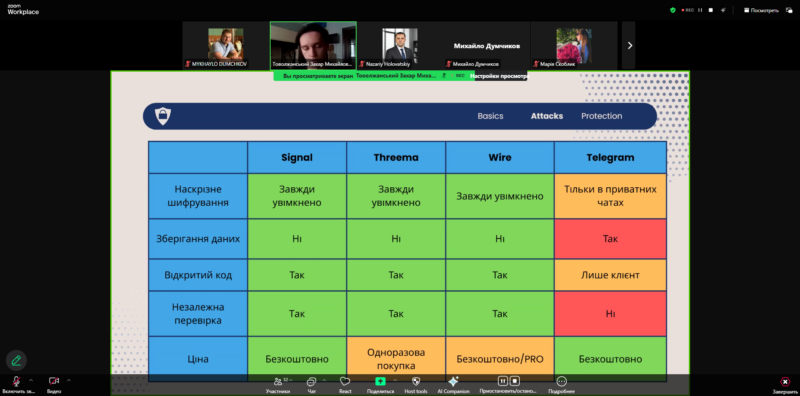
Zakhar Tovolzhanskyi, representing the Student Information Technology Center at SumDU, addressed the practical aspects of digital security. He highlighted the critical risks associated with downloading applications from unofficial sources and utilizing outdated software, providing empirical examples of prevalent attack vectors, including phishing and malware.
A dedicated discussion panel was formulated to compare the security philosophies of closed ecosystems (iOS) versus open-source platforms (Android). Participants were provided with actionable recommendations for digital hygiene, encompassing regular device reboots, timely software updates, the implementation of robust authentication protocols (including biometrics), and the avoidance of public Wi-Fi networks.
The workshop stimulated a dynamic debate. Notably, participants inquired about the protection of behavioral data and the practical implementation of the “right to be forgotten” within the Ukrainian legal context. Engaging prospective applicants in such open academic forums is of paramount importance, as it facilitates their immersion into the complexities of modern legal professions and underscores the relevance of European standards in cyberspace prior to their formal matriculation.
Following the event’s conclusion, the participants and organizers delineated the following strategic objectives:
Supporting legislative initiatives aimed at updating domestic personal data protection laws to align with EU standards, particularly concerning the technical realities of cloud-based biometrics.
Enhancing the digital literacy of the student body and general users regarding the risks of data dissemination within mobile applications.
Deepening collaborative efforts to organize future academic events focused on cybersecurity and digital rights within the ongoing scope of the Jean Monnet Module project.
We extend our profound gratitude to all speakers and attendees for their active participation, insightful inquiries, and highly professional discourse!

“Funded by the European Union. Views and opinions expressed are however those of the author(s) only and do not necessarily reflect those of the European Union or the European Education and Culture Executive Agency (EACEA). Neither the European Union nor EACEA can be held responsible for them.”